
A beautiful interior does not always require dramatic colours, expensive furniture or complicated decorative features. Sometimes, a carefully selected material can completely change the atmosphere of a room. Small details such as wall finishes, splashbacks and shower accents often have a greater visual impact than homeowners initially expect. Mosaic tiles are particularly useful in this regard because they introduce texture, pattern and detail without overwhelming the overall design.
For homeowners and renovators exploring carrara mosaic tiles, the appeal lies in their distinctive marble appearance and ability to complement different interior styles. Carrara marble is recognised for its light background and subtle grey veining, creating a sophisticated look that works with both traditional and contemporary spaces. When arranged in smaller pieces, this natural pattern becomes an attractive design feature that can add depth to otherwise simple surfaces.
The real advantage of mosaic design is its flexibility. A small installation can highlight a bathroom niche, create a stylish kitchen splashback or bring visual interest to a decorative wall. Different shapes and layouts also make it possible to achieve a personalised result without using multiple competing materials. Understanding the available patterns, finishes and installation requirements can help homeowners make a choice that looks attractive and remains practical over time.
What Makes Carrara Marble a Distinctive Design Choice?
Carrara marble has a recognisable appearance that comes from its pale natural background and delicate grey markings. Unlike heavily patterned stones, its veining can provide visual interest while maintaining a calm and balanced atmosphere. This makes it suitable for rooms where homeowners want a refined finish without introducing strong colours or distracting patterns. Its natural variation also means that individual pieces will not look completely identical.
When marble is cut into mosaic pieces, the stone’s natural character becomes part of a larger pattern. The arrangement can make a wall look more detailed while preserving the elegance of the original material. Depending on the selected design, the result may feel classic, decorative or contemporary. This combination of natural material and smaller geometric shapes gives Carrara mosaics a place in both subtle renovations and more distinctive interior projects.
Why Mosaic Formats Work So Well in Smaller Spaces
Large-format tiles can create a clean and uninterrupted appearance, but they are not always the most interesting choice for every part of a room. Mosaics offer a different approach by introducing smaller shapes that can define a particular area. A narrow strip behind a bathroom vanity, a shower niche or a kitchen splashback can become a focal point without requiring an entire wall to be covered in decorative material.
Smaller pieces also provide flexibility around curves, corners and architectural details. The mesh-backed sheets commonly used for mosaics help installers work with repeated patterns and maintain consistent spacing. However, the final result still depends on careful alignment and preparation. Even a small area can look untidy if the sheets are uneven, the joints vary or the pattern does not line up correctly with surrounding surfaces.
Exploring Different Carrara Mosaic Patterns
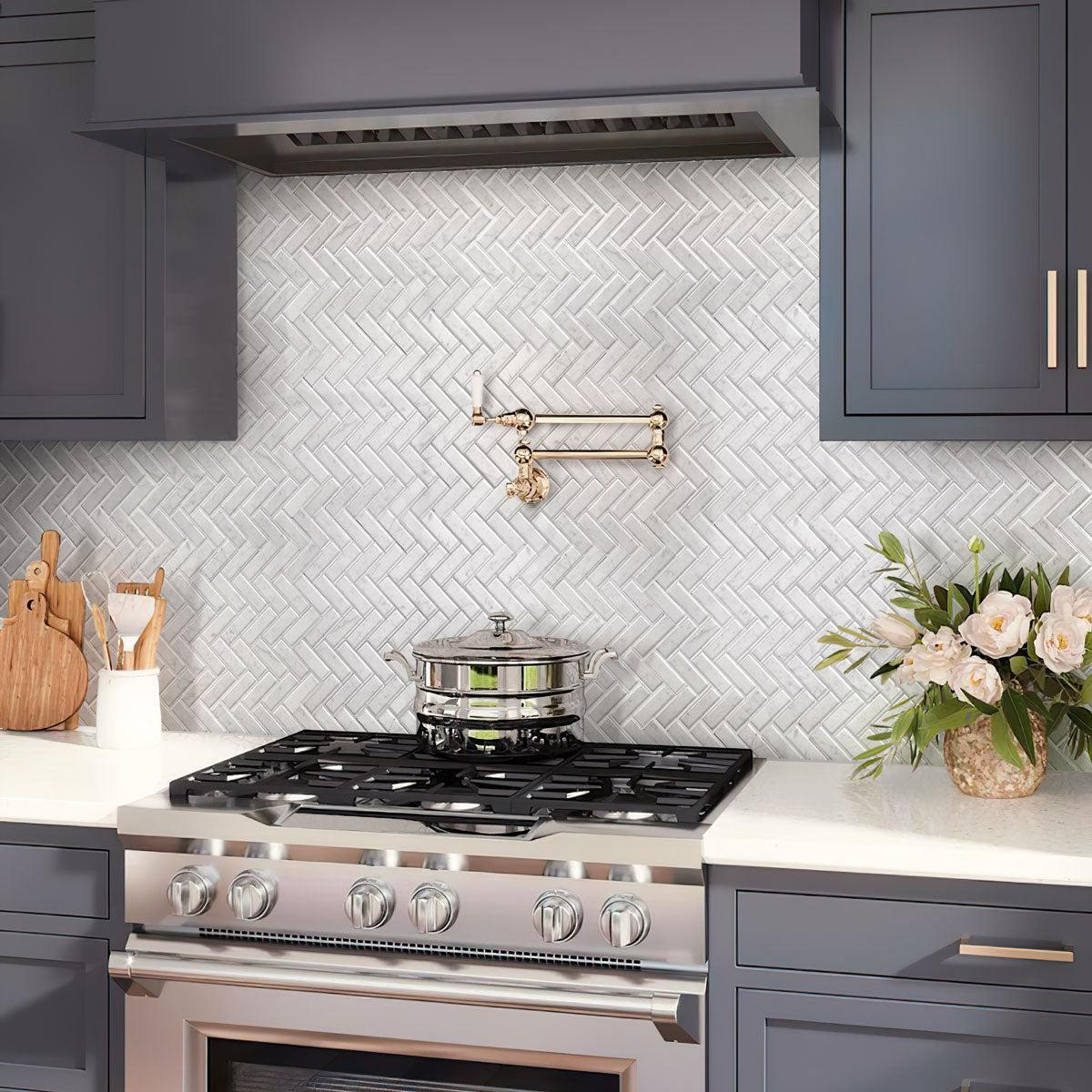
The shape of a mosaic can influence the overall style just as much as the marble itself. Oblong mosaics create a structured appearance and can be arranged to emphasise horizontal or vertical lines. They are particularly effective on feature walls where a homeowner wants a modern interpretation of traditional marble. The repeated shapes give the surface rhythm while the natural veining prevents it from looking too uniform.
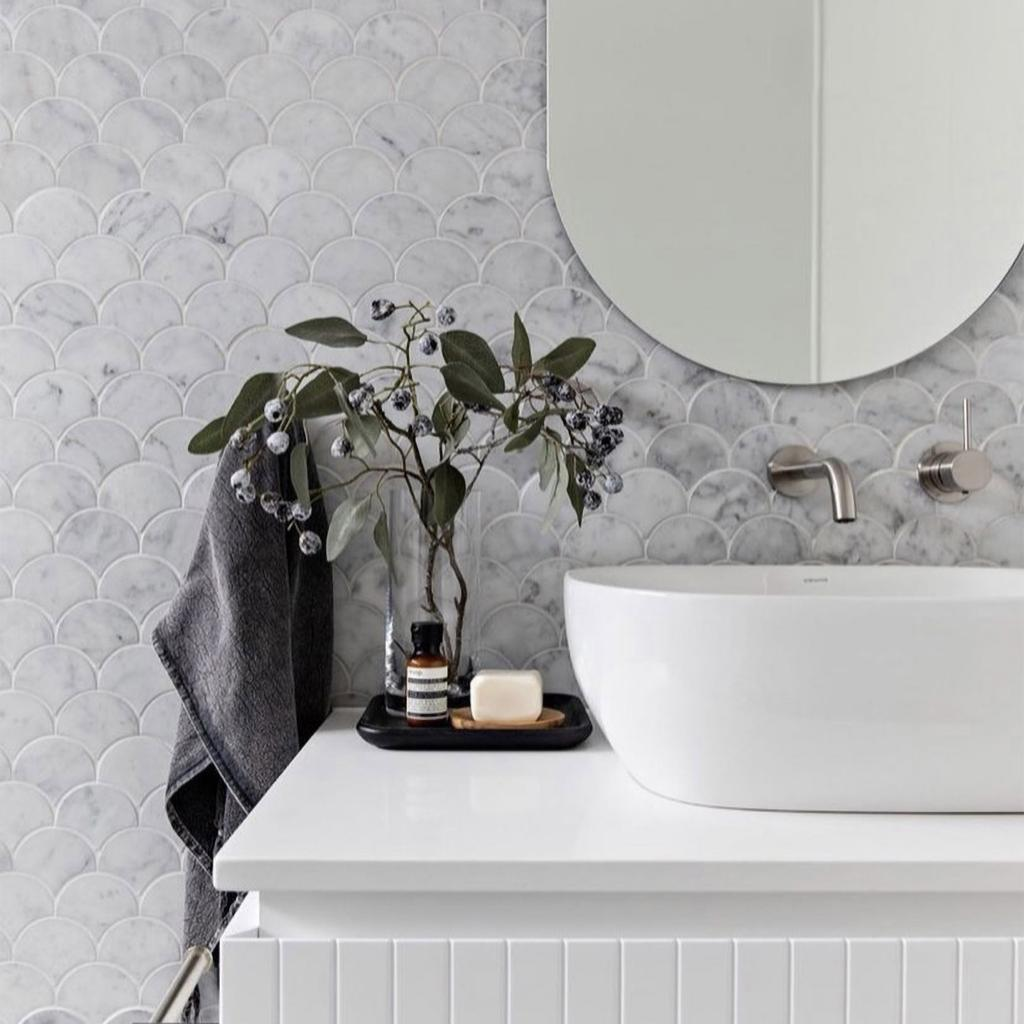
Fan-shaped designs offer a softer and more decorative alternative. Their curved outlines can introduce movement and make a vanity wall or bathroom feature feel more distinctive. Other geometric arrangements, including hexagons and smaller rectangular pieces, can suit interiors that lean towards contemporary styling. Before choosing a pattern, consider the scale of the room and the size of the installation. A highly detailed mosaic may work beautifully as an accent but could feel too busy across a large surface.
Creating an Elegant Kitchen Splashback
A kitchen splashback is one of the most visible decorative surfaces in a home. It sits between the worktop and cabinetry, making it an ideal place to introduce a material with natural texture. Carrara marble mosaics can complement white kitchens, timber cabinetry, neutral stone benchtops and darker modern finishes. Their lighter appearance can also help balance rooms that contain several strong design elements.
Practical considerations are just as important as appearance in a cooking area. Splashbacks are exposed to oil, food splashes, water and regular cleaning, so the marble should receive appropriate care. Natural marble can be sensitive to acidic substances, including lemon juice and some common household cleaners. A suitable sealer and a cleaning routine recommended for natural stone can help protect the surface. It is also worth discussing grout selection with the installer because grout colour and joint width can noticeably change the finished appearance.
Adding Character to Bathroom Walls and Shower Niches
Bathrooms are ideal spaces for decorative mosaics because they often contain several smaller architectural features. A Carrara mosaic can be used behind a vanity mirror, inside a recessed shower niche or across a selected wall to create contrast with larger surrounding tiles. This approach allows homeowners to introduce marble detail without making every surface visually complicated.
A coordinated design is usually more effective than combining too many different patterns. For example, a simple neutral wall tile can provide a quiet background for a decorative marble niche. Matching the undertones of the larger tiles with the Carrara mosaic helps the room feel connected. In wet areas, however, the selected product must be suitable for the intended application. Floor use requires particular attention to slip resistance, maintenance and the manufacturer’s technical recommendations.
Choosing the Right Grout for a Refined Finish
Grout may appear to be a minor part of a tiling project, but it has a considerable influence on the finished design. A light grout can create a softer appearance by blending with the marble background, while a slightly contrasting shade can make individual mosaic pieces more noticeable. The right option depends on the pattern, the colour of the stone and the atmosphere the homeowner wants to achieve.
The joint width should also be consistent throughout the installation. Uneven grout lines can interrupt the pattern and make a premium material look poorly finished. Before the full installation begins, it can be useful to review a small sample arrangement with the proposed grout colour. This gives homeowners a better idea of how the different elements will work together once the surface is complete.
Combining Carrara Mosaics With Other Materials
One of the strengths of Carrara marble is that it can work alongside a wide range of finishes. Timber introduces warmth and softens the cool appearance of pale marble, making the combination suitable for bathrooms and kitchens. Matte black fixtures can create a stronger contemporary contrast, while brushed nickel and chrome fittings maintain a more understated appearance. Neutral cabinetry and simple wall colours allow the stone to remain the main decorative feature.
Natural materials should be coordinated rather than matched too precisely. A bathroom does not need marble on every surface to feel cohesive. In fact, using one decorative mosaic alongside larger plain tiles can create a more balanced result. The same principle applies to kitchens, where a patterned splashback can provide enough detail without competing with the benchtop, cabinet doors and flooring.
Understanding the Available Carrara Mosaic Options
Mosaic collections can include different stone formats, dimensions and finishes, so it is worth reviewing the product specifications before selecting a design. Bargain Factory Tile Outlet’s mosaic range includes Carrara marble options in oblong and fan patterns, giving buyers different ways to introduce natural marble detailing into their projects. The listed products include honed finishes and individual sheet dimensions, which are useful details to check when planning coverage. <Cite refs={[“turn659202view0”]}/>
A honed surface generally has a smooth, matte appearance rather than the reflective look associated with polished stone. This can create a softer visual effect and work particularly well with contemporary interiors. However, the choice between finishes should also consider cleaning, sealing and the location of the installation. Ask the supplier whether the exact product is appropriate for walls, floors or wet areas rather than assuming all marble mosaics can be used in the same way.
Planning Quantities Before Ordering
Accurate measurements can prevent unnecessary costs and delays. Start by measuring the width and height of the area to be tiled, then calculate the total square metre coverage. If the project includes niches, corners or several separate sections, measure each area individually. This makes it easier to estimate the number of mosaic sheets required and reduces the chance of ordering an unsuitable quantity.
It is also sensible to allow for cuts and possible breakages. The amount of extra material needed depends on the shape of the installation and how many edges or corners are involved. A straightforward rectangular splashback may require less additional material than a wall with multiple niches or unusual angles. Confirm whether the listed price is per sheet or per square metre, and check the coverage of each sheet before comparing quotes. Keep a small number of spare pieces where possible for future repairs.
Installation Details That Should Not Be Overlooked
Good installation begins with a properly prepared surface. The substrate should be clean, stable and suitable for the selected adhesive system. Uneven walls can make mosaic sheets difficult to align, while poor preparation may affect how securely the tiles remain in place. Installers should also consider the layout before applying adhesive, especially where the pattern needs to line up with a vanity, tapware or surrounding tile edges.
Natural marble requires appropriate installation materials and careful handling. Adhesives, grout and sealers should be compatible with the stone and the intended environment. Some materials may affect the colour or appearance of light marble, so it is important to follow the manufacturer’s guidance. Professional installation can be especially valuable when working with intricate patterns, small pieces and visible feature areas where even minor alignment problems are noticeable.
Maintaining the Natural Beauty of Marble Mosaics
Carrara marble can retain its appearance for many years with suitable maintenance. Routine cleaning should be gentle, using a soft cloth or sponge and a cleaner specifically designed for natural stone. Avoid acidic products such as vinegar and lemon-based cleaners because they can react with marble and leave dull marks. Abrasive pads should also be avoided because they may damage the surface.
Sealing can help reduce the absorption of moisture and staining substances, although it does not make marble completely resistant to damage. The right sealing schedule depends on the product, finish and installation location. Kitchen splashbacks may require more frequent attention than decorative walls in a dry area. Following the supplier’s care instructions and cleaning spills promptly can make everyday maintenance easier.
Making a Small Decorative Feature Feel Special
A successful interior does not depend on covering every wall with expensive materials. Sometimes, a carefully selected decorative section can provide more impact than a complete room renovation. A marble mosaic behind a bathroom mirror, a narrow kitchen feature or a small shower niche can introduce texture while allowing the rest of the room to remain simple.
For homeowners considering carrara mosaic tiles, the most useful starting point is to decide where the material will have the greatest visual impact. Compare the available shapes, look at samples under the lighting conditions of the room and consider how the marble will work with existing fixtures and finishes. A thoughtful choice can turn a relatively small installation into a detail that defines the entire space.
Conclusion
Carrara marble mosaics offer a distinctive way to bring natural texture and understated elegance into kitchens, bathrooms and other interior spaces. Their pale backgrounds, grey veining and variety of patterns make them suitable for both traditional and contemporary designs. Whether used for a splashback, shower niche or decorative wall, they can add detail without making the overall room feel crowded.
The best results come from considering more than the appearance of the stone. Product suitability, grout colour, surface preparation, installation quality and ongoing care all contribute to a successful project. By reviewing samples and checking technical specifications before ordering, homeowners can choose a mosaic design that complements their space and remains attractive over time.
Frequently Asked Questions
1. What are Carrara marble mosaic tiles?
Carrara marble mosaic tiles are small pieces of natural marble arranged into decorative sheets. They typically feature a light background with natural grey veining and are available in several shapes and patterns.
2. Where can Carrara mosaics be used?
They are commonly used for kitchen splashbacks, bathroom feature walls, vanity areas and shower niches. Floor and wet-area applications should only be considered when the specific product is approved for that use.
3. Are Carrara marble mosaics difficult to maintain?
They require some care because natural marble can be affected by acidic cleaners and staining substances. Gentle stone-safe cleaning products and appropriate sealing can help maintain their appearance.
4. Which grout colour works best with Carrara marble?
White and light grey grout are popular choices because they complement the stone’s natural colouring. A contrasting shade can make the mosaic pattern more noticeable, depending on the desired design.
5. Should Carrara marble mosaics be installed by a professional?
Professional installation is recommended for intricate patterns, shower areas and prominent feature walls. An experienced installer can help with sheet alignment, adhesive selection, grout spacing and surface preparation.
Let Appkod AU Help You Grow Your Business Online
From SEO strategy to better visibility, we help businesses turn search traffic into real growth.
Talk to Appkod AU