
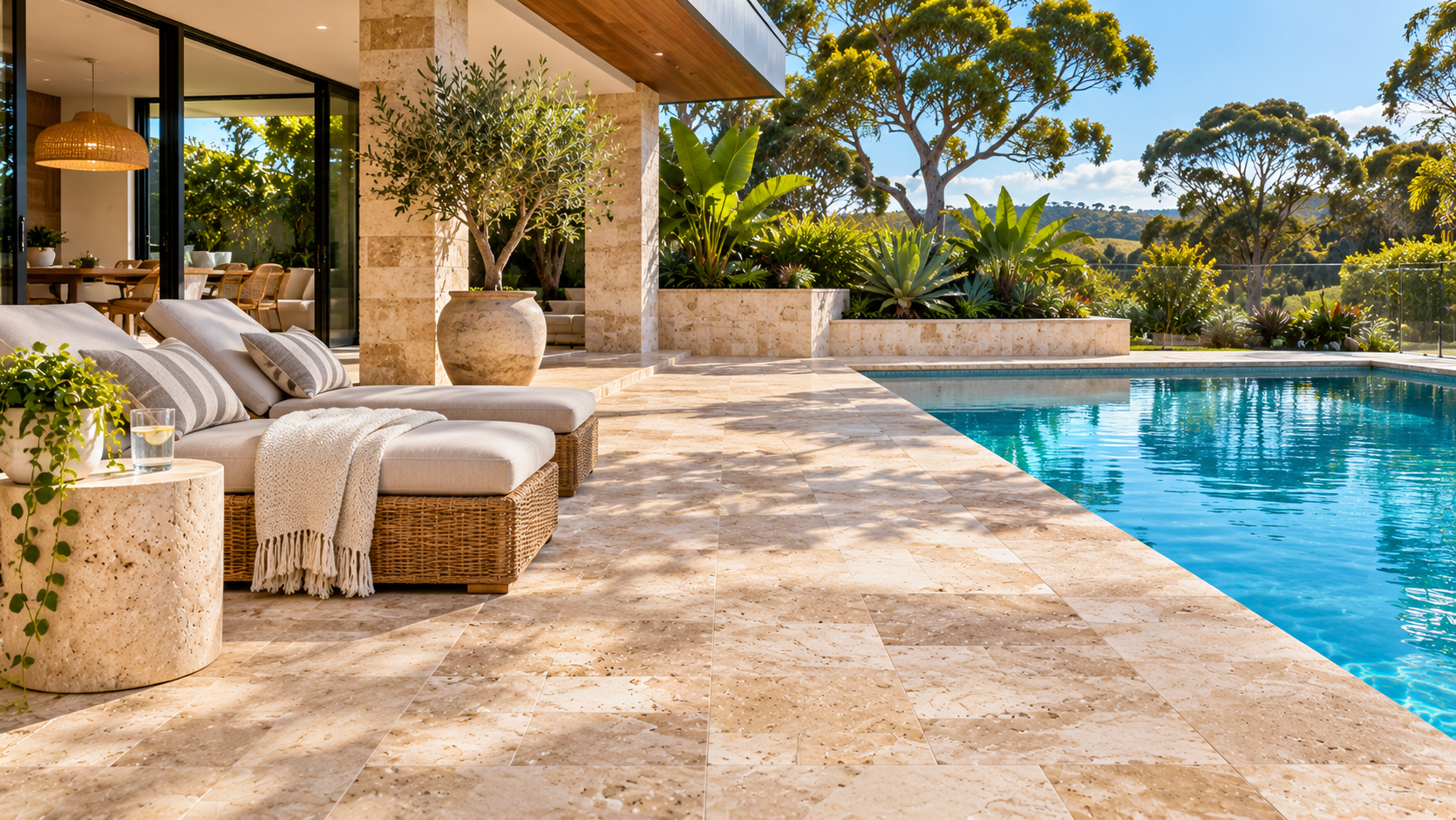
A swimming pool can become one of the most inviting parts of a home, particularly when its surrounding area is designed for relaxation, outdoor entertaining and everyday family use. In Australia, where outdoor living is an important part of residential design, the choice of paving can have a major influence on how comfortable and attractive a poolside environment feels. Beyond colour and appearance, homeowners need to think about surface temperature, water exposure, slip resistance, maintenance and how the paving will perform over time. Natural stone is one option worth exploring because it offers distinctive textures and colours that can complement a wide range of outdoor settings.
Travertine has become an appealing material for outdoor design because of its natural appearance and availability in different finishes, colours and formats. Its soft neutral tones can work alongside landscaped gardens, timber features, rendered walls and contemporary pool designs. Rather than creating a highly uniform surface, natural travertine introduces subtle variations that give an outdoor area more character. However, not every stone product is suitable for every poolside application. The finish, thickness, installation method and product specifications all need to be considered before making a final decision.
For homeowners planning a new pool or upgrading an existing entertaining area, travertine pavers sydney can be part of a wider design conversation about creating an outdoor space that looks attractive and functions well. Sydney’s weather can bring hot sunny days, periods of heavy rain and changing seasonal conditions. A successful paving choice should therefore be based on the specific site, expected use and professional advice rather than appearance alone. Understanding the practical qualities of travertine can help homeowners make a more informed decision.
How Outdoor Conditions Influence Poolside Paving Choices
Poolside paving is exposed to conditions that are quite different from those experienced by indoor flooring. Water splashes, wet feet, direct sunlight, outdoor furniture and regular cleaning all place demands on the surface. A material that looks attractive in a showroom may not necessarily be appropriate around a swimming pool. Homeowners should examine the product’s technical specifications and confirm that its intended use includes the type of wet outdoor environment where it will be installed.
Weather exposure also deserves attention during the planning stage. Strong sunlight can influence surface temperatures, while rain and moisture can affect drainage and the condition of the installation over time. The underlying base, correct falls and suitable drainage provisions are just as important as the paving material itself. When these elements are planned properly, the finished poolside area is better prepared for regular use and changing outdoor conditions.
Understanding Travertine’s Natural Appearance Around Swimming Pools
One of the reasons homeowners consider travertine is its ability to create a relaxed and natural outdoor atmosphere. Its cream, ivory, beige and other earthy tones can complement blue pool water without making the surrounding area feel visually overwhelming. These colours also work well with greenery, natural timber, stone garden walls and outdoor furniture. The result can feel connected to the surrounding landscape rather than appearing like a separate decorative feature.
Natural variation is another part of its appeal. Individual pieces may contain different markings, small holes and variations in shade, giving the completed surface a distinctive appearance. This variation can help larger poolside areas feel less repetitive than surfaces with a completely uniform pattern. Homeowners should still inspect samples before purchasing because the appearance of natural stone can differ from photographs and small display pieces. Viewing several pavers together provides a more realistic idea of the final installation.
Selecting a Suitable Finish for Wet Outdoor Areas
The surface finish is one of the most important considerations when choosing poolside paving. A finish should be evaluated for its suitability in wet conditions, including its tested slip resistance and the requirements of local building standards. A visually attractive surface is not automatically a safe choice around a swimming pool. Homeowners should request product-specific information from the supplier and discuss the intended application with an experienced installer before ordering materials.
Different finishes can also create different design effects. Some provide a smoother and more understated appearance, while others have a more textured or aged character. The right selection depends on the location, expected foot traffic, cleaning requirements and the manufacturer’s guidance. It is especially important to avoid choosing a finish based only on how it feels when dry. Poolside surfaces need to be assessed in the context of regular water exposure and the people who will use the space.
Designing a Comfortable Outdoor Area for Summer
During warmer months, poolside spaces often become the centre of outdoor activity. Families may use the area for swimming, meals, gatherings and quiet afternoons in the sun. The colour and physical characteristics of paving can influence how the space feels underfoot, although actual surface temperature depends on several factors, including sunlight, shade, stone composition and surrounding conditions. Lighter natural tones are frequently considered in outdoor designs because they create a bright and open appearance.
Shade planning can make an equally important contribution to comfort. Pergolas, umbrellas, established trees and carefully positioned outdoor structures can reduce direct sun exposure in selected areas. The placement of loungers, dining furniture and pathways should also be considered before installation begins. When paving is planned as part of the complete outdoor layout, the pool area can feel more practical and welcoming rather than simply being a surface surrounding the water.
Coordinating Pool Paving With Gardens and Outdoor Architecture
A well-designed poolside area should connect naturally with the rest of the property. Travertine’s earthy appearance can complement coastal-inspired homes, contemporary architecture and traditional gardens. For example, cream-toned paving may work well with white exterior walls and timber furniture, while deeper natural colours can create contrast against lighter landscaping. The objective is to build a consistent palette in which the paving supports the home’s existing materials instead of competing with them.
The transition between the pool, garden, patio and entertaining areas also needs careful attention. Changes in level, drainage channels, steps and adjoining surfaces should be incorporated into the design from the beginning. If the property includes an outdoor kitchen or covered dining area, the paving layout can help visually connect these spaces. Homeowners researching travertine pavers sydney can compare available stone styles and finishes while considering how the selected material will complement the surrounding landscape. Visual planning tools such as Dreamina can also help illustrate possible colour palettes and outdoor design ideas, although actual product samples and professional specifications should guide the final selection.
Installation and Maintenance Considerations
Even a suitable paving product can produce disappointing results if it is installed incorrectly. Poolside projects require attention to the base preparation, drainage, adhesive or bedding system, jointing materials and the manufacturer’s installation instructions. Water should be directed away from areas where it could collect or create ongoing problems. A qualified installer should assess the site conditions and confirm that the proposed installation method is appropriate for the selected stone and poolside environment.
Maintenance should also be understood before purchasing. Travertine is a natural porous stone, so suitable sealing and cleaning practices may be required to help protect it from moisture and staining. Pool chemicals, organic debris, sunscreen and everyday outdoor spills can all affect the surface if they are not managed appropriately. Homeowners should follow the supplier’s recommendations for cleaning products and resealing intervals, avoiding harsh chemicals that may damage the stone. A straightforward maintenance routine can help preserve the appearance of the paving over the years.
Making a Practical Decision for a Long-Term Poolside Design
Choosing poolside paving involves balancing appearance, performance and the total cost of the project. The initial purchase price is only one part of the budget. Preparation, installation, cutting, drainage, sealing and future maintenance can all contribute to the overall expense. Comparing products on the basis of their specifications and suitability can help homeowners avoid decisions that look economical at first but create additional work later.
It is also useful to consider how the outdoor area may be used in the future. A family with young children may have different priorities from homeowners who mainly use their pool for entertaining guests. The amount of shade, frequency of use, surrounding landscaping and cleaning routine can all influence the best choice. Taking time to review these details makes it easier to select a surface that suits the property’s needs rather than following a design trend that may not be practical.
Conclusion
Travertine can be an attractive option for poolside paving because of its natural colours, distinctive patterns and ability to complement different outdoor design styles. Its suitability, however, depends on choosing the correct product and finish for the intended environment. Slip resistance, water exposure, drainage, installation quality and ongoing care should all be considered before committing to a particular material.
For Sydney homeowners, the best poolside design is one that combines visual appeal with practical planning. Comparing actual samples, checking technical specifications and consulting experienced installers can help create an outdoor area that remains comfortable and functional through changing weather conditions. With the right preparation, natural stone paving can become an important part of a welcoming outdoor living space.
Frequently Asked Questions
1. Is travertine suitable for poolside paving?
Travertine may be suitable for poolside applications when the specific product, finish and installation system are designed for wet outdoor use. Homeowners should confirm slip resistance and other relevant specifications with the supplier and installer before purchasing.
2. Does travertine become hot in direct sunlight?
Surface temperature depends on factors such as stone composition, colour, exposure and surrounding conditions. Some lighter-coloured products are considered for outdoor areas, but homeowners should request product information and assess samples in the conditions where they will be installed.
3. Does travertine paving need to be sealed around a swimming pool?
Travertine is porous, so sealing is commonly recommended to help protect it from moisture and staining. The appropriate sealer and maintenance schedule should follow the stone supplier’s instructions and take account of the poolside environment.
4. What should I check before buying poolside travertine?
Check the product’s intended application, slip-resistance information, finish, thickness, colour variation and installation requirements. It is also important to discuss drainage, sealing and maintenance with a qualified professional.
5. Can travertine complement a modern pool design?
Yes. Its natural neutral tones can work well with modern pool shapes, simple landscaping, glass fencing, timber details and contemporary outdoor furniture. Selecting a suitable colour and finish helps maintain a balanced overall appearance.
Let Appkod AU Help You Grow Your Business Online
From SEO strategy to better visibility, we help businesses turn search traffic into real growth.
Talk to Appkod AU