
A website is often the first serious interaction a customer has with a business. Before they call, visit a shop, request a quote or place an order, they may spend a few minutes deciding whether the website feels useful, trustworthy and easy to understand. That small window matters more than many businesses realise.
Website design Appkod is best understood as more than choosing colours, fonts and page layouts. A useful website needs to support real business goals. It should help visitors find the right information quickly, make the company look credible, work properly on phones and desktops, and guide people toward the next action without making them think too hard.
Design becomes even stronger when it supports search visibility from the beginning. Businesses that want the website structure and content to work with organic search can connect the project with Appkod’s SEO services instead of treating SEO as something to fix after the site is already built.
What Makes a Business Website Effective?
An effective website makes life easier for the visitor. It answers the obvious questions, removes doubt and gives people a clear route forward. A visitor should not have to hunt for contact details, guess what a company actually offers or scroll through large blocks of vague marketing copy before reaching useful information.
Good design also creates a sense of order. Headings tell the visitor where they are. Menus make important pages easy to reach. Images support the message instead of distracting from it. Buttons look clickable, forms are short enough to complete, and the visual style feels consistent from one page to the next.
The best business websites balance appearance with purpose. A page can be visually impressive and still perform poorly if it is slow, confusing or built around the preferences of the owner instead of the needs of the customer. Design should make the business easier to understand, not harder.
Core Elements of Website Design Appkod
1. Clear Planning Before Design Starts
The strongest website projects start with questions. Who is the target customer? Which services or products matter most? What action should a visitor take? Which pages already bring traffic? What problems does the current website create? These answers influence the structure before visual design begins.
A local service company may need strong service pages, location information, trust signals and a simple enquiry form. An online store needs product discovery, category navigation, clear pricing and a smooth checkout. A professional consultancy may need expertise, case studies and a strong consultation path. The website should reflect the business model.
2. Responsive Design for Every Screen
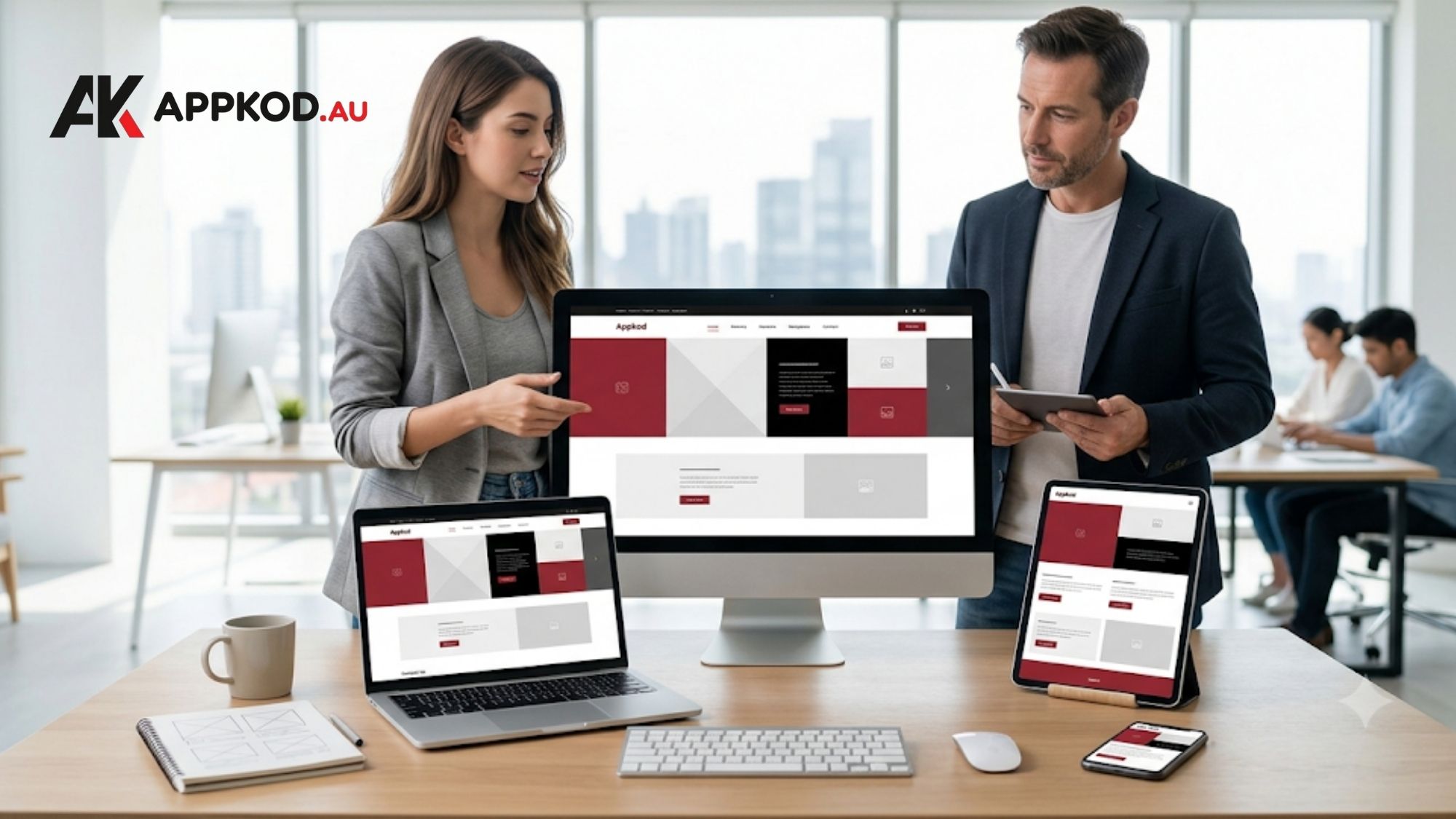
Customers do not browse from one standard device. They may open the site on a phone during a commute, return on a laptop at work and later show it to someone on a tablet. Responsive design helps the layout adapt without breaking the experience.
On mobile, this means readable text, comfortable spacing, easy-to-tap buttons and navigation that does not cover the screen. Images should resize properly instead of being cropped in awkward places. Forms should be practical to complete with a thumb. A good responsive site feels natural rather than simply being a smaller version of the desktop page.
3. Fast Loading and Clean Performance
A slow website loses patience and trust. Large images, unnecessary scripts, too many plugins and poorly optimised page builders can make a simple page feel heavy. Performance should be considered during design, not only after complaints start coming in.
Images can be compressed and served in modern formats. Fonts and scripts can be limited to what is actually needed. Hosting, caching and code quality also matter. These technical choices may be invisible to the visitor, but the difference is obvious when one site responds quickly and another feels sluggish.
4. SEO-Friendly Website Structure
A website can look excellent and still struggle to appear in search results if its structure is weak. Search-friendly design uses logical URLs, descriptive headings, useful page copy, internal links and clear site hierarchy. Important pages should not be hidden deep inside the navigation.
For an existing website, an SEO audit can help identify technical, indexing and on-page problems before a redesign changes the site further.
5. Content That Sounds Like the Business
Design cannot carry a page when the words are vague. Strong website content explains what the business does in plain language, shows why the offer matters and gives visitors enough detail to make a decision. It should sound like the company, not like a generic template that could belong to any competitor.
Useful copy often includes specific services, customer problems, practical benefits, proof and next steps. It avoids empty phrases such as “world-class solutions” when a more concrete explanation would be more helpful. Good writing and good design work together because the layout gives the message room to breathe.
6. Calls to Action That Make Sense
A call to action tells the visitor what to do next. Depending on the business, that may be “Request a Quote,” “Book a Consultation,” “Call Now,” “View Products” or “Get an Audit.” The best call to action feels like the natural next step instead of a demand.
Placement matters as well. A visitor who has just read a service explanation may be ready to enquire. Someone at the top of the page may still need more information. A thoughtful design repeats important actions at sensible points without filling every section with competing buttons.
How Website Design Supports SEO
Website design and SEO influence each other more than people sometimes expect. Search engines need to understand the site, while users need to navigate it. When a website has a clear hierarchy, useful internal links and well-organised pages, both groups benefit.
Design also affects engagement. If a page is difficult to read or slow to load, people may leave before reaching the useful content. If headings are clear, paragraphs are readable and related services are easy to discover, visitors are more likely to continue exploring the site.
Businesses serving customers in specific cities or service areas can also structure their website to support Local SEO with clear location information, relevant service-area pages and consistent contact details.
Website Design for eCommerce Stores
An eCommerce website has to do more than explain a business. It must help customers browse, compare and buy. Product categories need to make sense, product pages need enough information, images should be clear and the path from product to checkout should feel simple.
Small design problems can reduce sales. A hard-to-find size guide, unclear delivery details, poor mobile filters or a confusing checkout can stop a purchase even when the customer likes the product. Good eCommerce design removes these small points of friction.
Online retailers can pair design improvements with Appkod’s eCommerce SEO to strengthen product and category visibility while improving the shopping experience.
What to Keep When Redesigning an Existing Website
A redesign is not always a fresh start. Existing websites may already have pages that rank in Google, backlinks from other sites, useful blog content and URLs customers have bookmarked. Replacing everything without checking performance can remove assets the business spent years building.
Before changing the structure, review search traffic, top landing pages, conversions and important backlinks. If a page needs a new URL, plan a redirect. If an old article still attracts useful traffic, improve it rather than deleting it without a reason. A redesign should preserve what works while fixing what does not.
It is also worth listening to staff who speak with customers every day. Sales and support teams often know which questions people repeatedly ask, what information is hard to find and where customers get confused. Those details can make a redesign far more practical.
Common Website Design Mistakes
Trying to impress before trying to explain: A dramatic homepage has little value if visitors still cannot tell what the company sells or who it serves.
Using too many fonts and colours: A smaller visual system usually feels more professional and makes the important elements easier to notice.
Making navigation complicated: Creative menus are not helpful when visitors cannot predict where a link will take them.
Ignoring mobile behaviour: A desktop layout may look polished while buttons, images and forms become awkward on a phone.
Using oversized images everywhere: Large files may look sharp but can slow the site unnecessarily if they are not optimised for the size in which they appear.
Forgetting conversion tracking: Without tracking forms, calls or purchases, the business may know how many people visited but not whether the website helped generate results.
How to Choose a Website Design Partner
A good website design partner should be interested in the business before talking about the template. Ask how they plan the site structure, how responsive behaviour is tested, how page speed is considered and what happens to existing SEO value during a redesign.
It is also important to understand the practical details. Who provides the content and images? How many revisions are included? Who owns the finished website? Can the business update pages later? Is ongoing support available? Clear answers prevent a design project from becoming frustrating after launch.
Before choosing a partner, it can help to review case studies, learn more about the team on the About Us page and read practical guidance on the Appkod blog.
Why Consider Website Design Appkod?
The useful part of working with a digital-focused website team is that design does not have to sit in isolation. A business website usually supports SEO, content, paid campaigns, local visibility and lead generation at the same time. Decisions made during design can either help those activities or make them harder later.
Website design Appkod can be approached with that wider role in mind. The objective is to create a site that looks credible, works properly across devices, supports search visibility and gives the business a practical platform it can keep improving after launch.
Final Thoughts
A strong website does not need to feel complicated. It needs to be clear, fast, useful and trustworthy. Visitors should understand what the business offers, find the information they need and know what to do next. When those basics are handled well, visual design has a much stronger effect.
The best website projects are built around real customers and measurable goals rather than short-lived design trends. That is the difference between a website that simply looks new and one that continues to support the business after the launch excitement is over.
If you are planning a new website or want to improve an existing one, use the Appkod contact page to share your website, goals and the main problems you want to solve.
Frequently Asked Questions
What is website design Appkod?
Website design Appkod refers to planning and creating business websites with attention to usability, responsive layouts, performance, clear content, SEO-friendly structure and conversion goals.
Why does a business need responsive website design?
Responsive design helps a website work properly on phones, tablets, laptops and desktop screens. It improves readability, navigation and usability for visitors using different devices.
Can website design affect SEO?
Yes. Site structure, page speed, mobile usability, internal links, headings and URL planning can all affect how easy a website is for search engines and visitors to understand.
Should an old website be redesigned completely?
Not always. Existing pages may already have rankings, backlinks or useful content. A redesign should first identify what is working so valuable SEO assets are preserved.
What should I prepare before starting a website project?
Prepare your main business goals, target audience, service or product list, examples of websites you like, existing analytics if available, brand assets and the actions you want visitors to take.
Let Appkod AU Help You Grow Your Business Online
From SEO strategy to better visibility, we help businesses turn search traffic into real growth.
Talk to Appkod AU